GEV (General Exhaust Ventilation)
Calibration & Performance Testing
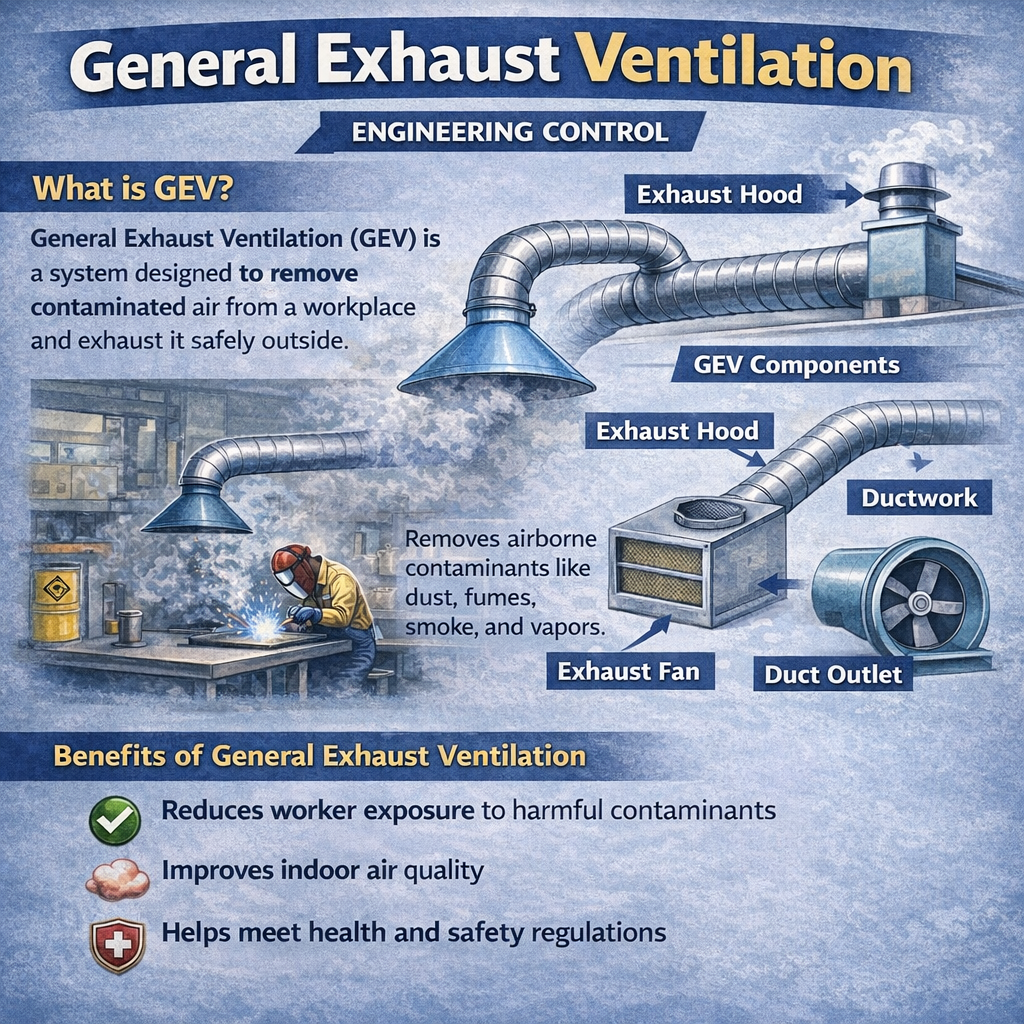
GEV calibration is the process of measuring, verifying, and adjusting the performance of a General Exhaust Ventilation (GEV) system to ensure it provides adequate overall air exchange and contaminant dilution within a workspace. Unlike LEV, which captures pollutants at the source, GEV is designed to control background air quality by removing contaminated air and introducing fresh air.
Calibration typically involves airflow rate measurement, air change rate (ACH) calculation, duct velocity and static pressure checks, and system balancing to confirm the ventilation system operates according to its design intent and applicable guidelines. The assessment ensures that heat, vapours, fumes, and general airborne contaminants are effectively diluted and removed
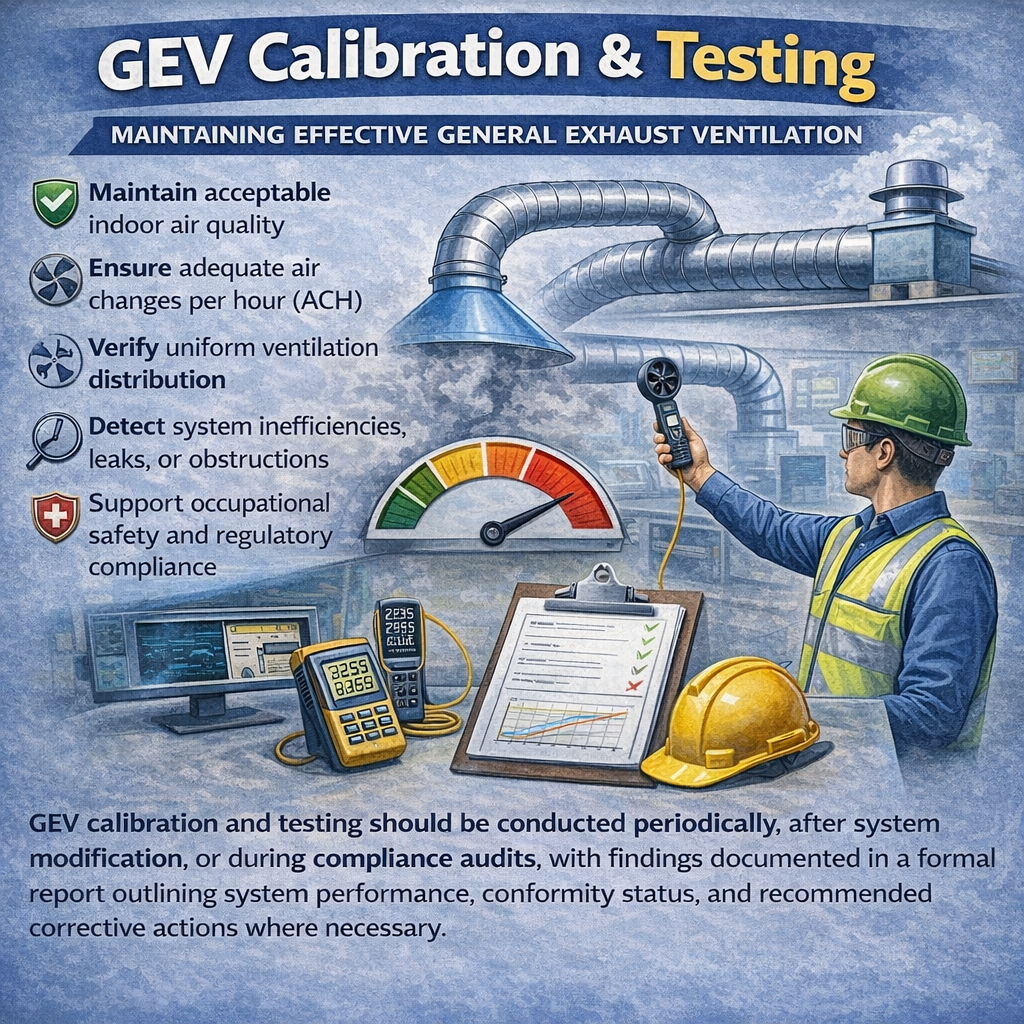
GEV Calibration Benefit
Maintain acceptable indoor air quality
Ensure adequate air changes per hour (ACH)
Verify uniform ventilation distribution
Detect system inefficiencies, leaks, or obstructions
Support occupational safety and regulatory compliance
GEV calibration and testing should be conducted periodically, after system modification, or during compliance audits, with findings documented in a formal report outlining system performance, conformity status, and recommended corrective actions where necessary.