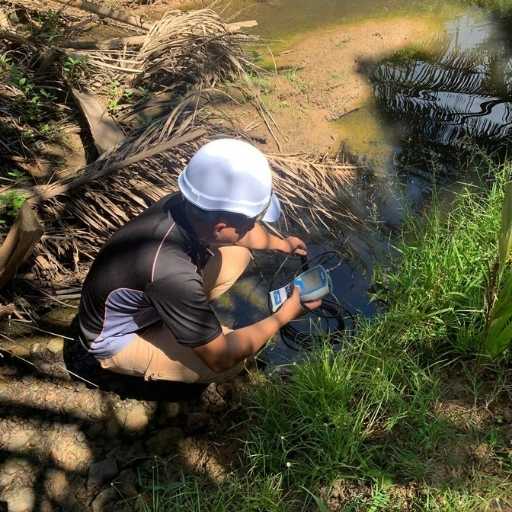
In-Situ Testing |
In-situ testing refers to the direct measurement, observation, or analysis of a sample or environmental condition at its original location without removing it for laboratory testing. This method is widely used in environmental and industrial applications where immediate, on-site results are important for timely assessment and decision-making.
It is commonly applied in water quality monitoring, river and wastewater assessment, soil and groundwater investigation, and environmental compliance monitoring. By using portable instruments and field-based methods, in-situ testing allows key parameters to be evaluated directly at the site, providing results that more accurately reflect actual conditions at the time of measurement.
| Ex-Situ Testing
Ex-situ testing refers to the measurement, observation, or analysis of a sample after it has been collected and removed from its original location for testing at another site, typically in a laboratory or controlled environment. This method is commonly used in water quality monitoring, river and wastewater assessment, soil and groundwater investigation, and environmental compliance monitoring where more detailed, precise, or specialized analysis is required.
By transferring the sample to a controlled testing environment, ex-situ testing allows the use of advanced instruments, standardized procedures, and broader analytical methods that may not be practical in the field. This approach is especially useful for obtaining comprehensive data, confirming field results, and evaluating parameters that require strict testing conditions. However, proper sampling, preservation, and handling are essential to ensure that the sample remains representative of the actual site conditions.